Phone:
(206 ) 992-71256
Physical address:
Everett, Washington
Email address:
info@whiskerfoundation.org

Phone:
(206 ) 992-71256
Physical address:
Everett, Washington
Email address:
info@whiskerfoundation.org
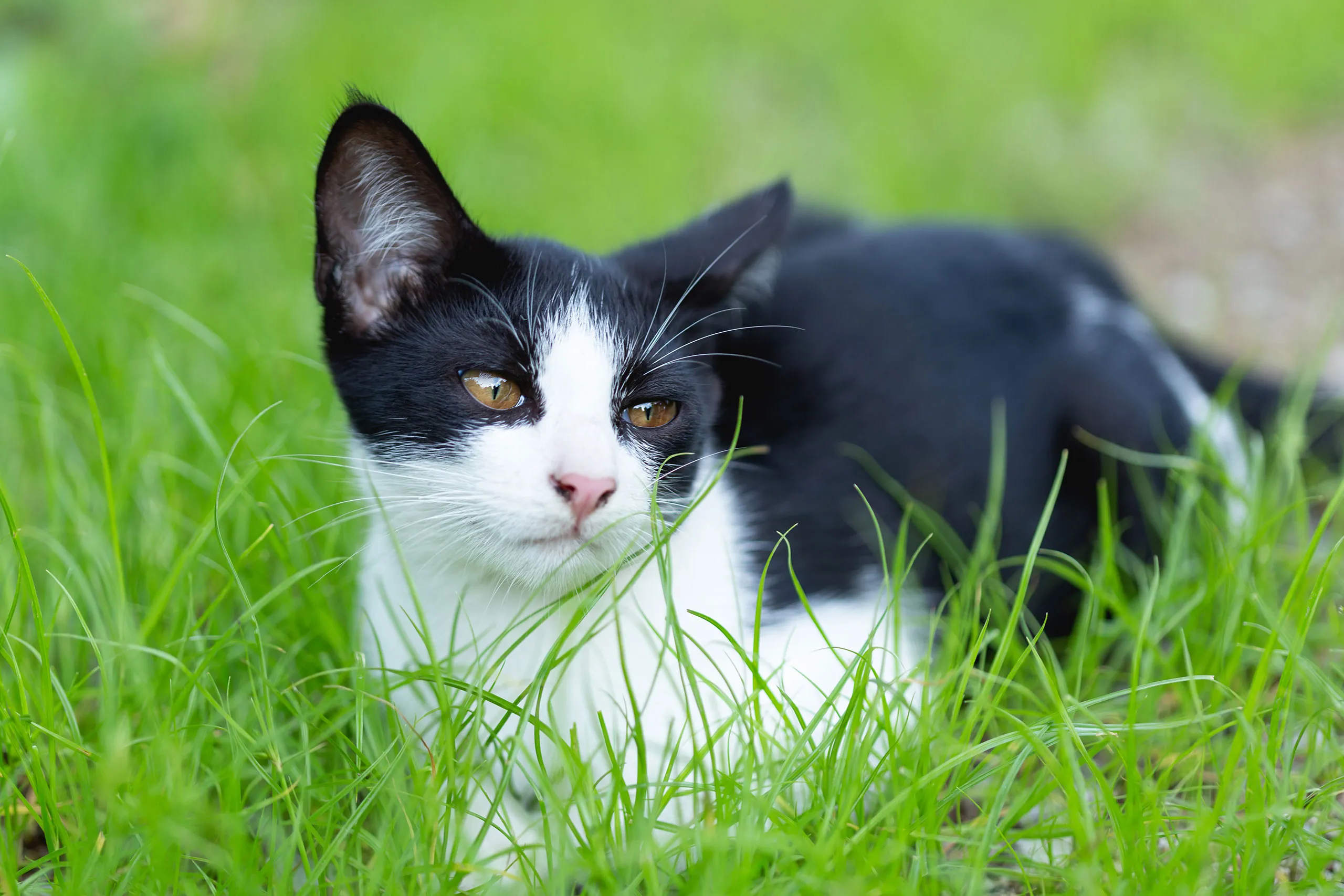
Has your 6-month-old kitten suddenly started meowing constantly, rolling on the floor, or acting unusually affectionate? Learn the signs of a kitten in heat, when cats can become pregnant, and why early spaying is so important.
Yes. If your female kitten is around 4 to 6 months old and has suddenly become unusually vocal, affectionate, restless, or is rolling on the floor while raising her hindquarters, she may be experiencing her first heat cycle. Many first-time cat owners are surprised to learn that kittens can go into heat much earlier than expected.
One day your kitten is happily chasing toys, napping in your lap, and acting like the playful baby you’ve come to know. Then, almost overnight, everything changes. She starts crying loudly, rubbing against furniture and your legs, rolling on the floor, and constantly trying to get your attention. Some kittens even become determined to get outside, leaving their owners wondering if something is wrong.
If your kitten is only six months old, it’s easy to assume she’s too young to be in heat. In reality, many female kittens experience their first heat between 5 and 6 months of age, and some begin as early as 4 months old. Because most people don’t expect a kitten this young to reach sexual maturity, the sudden change in behavior often comes as a complete surprise.
Unlike dogs, cats usually don’t bleed when they’re in heat. Instead, the changes are almost entirely behavioral. Some kittens become much more affectionate than usual, while others become restless and seem unable to settle down. You may also notice that your kitten constantly rubs against furniture, rolls on the floor, or raises her hindquarters with her tail held to one side whenever you pet her.
Other common signs include persistent meowing or yowling, pacing through the house, trying to escape outdoors, and eating a little less than normal. Male cats in the neighborhood may also begin appearing around your home because they can detect a female in heat from surprisingly long distances.
Although these behaviors can seem alarming, they are usually completely normal and are simply caused by the hormonal changes that occur during a heat cycle.
Watch: What Does a Cat in Heat Look Like?
If you’re still wondering whether your kitten is in heat, watching a real cat displaying these behaviors can be incredibly helpful. The video below shows many of the common signs discussed above, including increased vocalization, rolling on the floor, rubbing against objects, and the characteristic mating posture.
If your kitten’s behavior looks similar to the cat in this video, she’s likely experiencing her first heat cycle. While these behaviors are normal, it’s important to keep her safely indoors and talk with your veterinarian about the best time to have her spayed.
Yes. Most female cats experience their first heat around 5 to 6 months old, although some become fertile at just 4 months of age. Exactly when it happens depends on several factors, including the kitten’s breed, body weight, overall health, nutrition, the time of year, and even the amount of daylight she receives.
Because there isn’t one exact age that applies to every cat, veterinarians often recommend planning to have kittens spayed before their first heat cycle whenever possible.
Unfortunately, yes. A female kitten can become pregnant during her very first heat cycle and does not need to go through multiple cycles before becoming fertile. This is one of the most common reasons accidental litters occur. Many owners still see their kitten as a baby, but biologically she may already be capable of having kittens herself.
If a female cat doesn’t become pregnant, she will usually return to heat every few weeks throughout the breeding season. Each cycle brings another opportunity to become pregnant, and the situation becomes even more surprising after she has kittens.
Many people don’t realize that a mother cat can return to heat within days to a few weeks after giving birth, even while she is still nursing her litter. If she has access to an intact male cat, she can become pregnant again before her current kittens are weaned. Sadly, this is something animal rescues see every year and is one of the reasons the cat overpopulation problem continues to grow.
Cats are remarkably efficient breeders. A female cat continues cycling through heat until she becomes pregnant, and if she isn’t spayed, she may have multiple litters every year. Those kittens can then reach sexual maturity before their first birthday and begin having litters of their own.
It doesn’t take long for one unplanned litter to become dozens of cats over just a few years. This rapid cycle of reproduction is one of the biggest reasons shelters and rescues become overwhelmed with kittens every spring and summer.
Although many young cats successfully give birth and care for their kittens, pregnancy at such a young age places tremendous physical demands on a body that is still growing. Young mothers are more likely to experience nutritional deficiencies, slower growth, difficult labor, and the stress of raising a litter before they’ve fully matured themselves.
No kitten should have to become a mother before she’s had the chance to simply be a kitten.
Talk with your veterinarian about the best time to spay your kitten. Many private veterinary practices recommend scheduling the procedure around 4 to 5 months of age, before the first heat cycle begins.
However, you may notice that animal shelters and rescues often spay and neuter kittens much earlier. Early-age spay/neuter is commonly performed once a kitten is at least 8 weeks old and weighs 2 pounds or more. This practice is widely used by shelters and rescue organizations to ensure kittens are altered before being adopted, preventing accidental litters and helping reduce pet overpopulation.
Research has shown that early-age spay/neuter is safe for healthy kittens when performed by experienced veterinarians. Whether your kitten is spayed at 8 weeks through a shelter or rescue, or later through your family veterinarian, the most important thing is that the procedure is completed before an unplanned pregnancy can occur.
Spaying not only prevents unwanted litters but also eliminates future heat cycles, reduces the urge to roam, lowers the risk of certain reproductive diseases, and helps reduce cat overpopulation.
Absolutely. Living indoors doesn’t prevent a female cat from going into heat, and indoor cats occasionally slip through open doors or windows. Since intact male cats can detect a female in heat from a surprising distance, even a brief escape can result in an unexpected pregnancy.
Spaying your indoor cat provides important health benefits while also preventing accidents that could lead to another unwanted litter.
At Whisker Foundation, we’ve cared for many young mother cats that became pregnant before they were even a year old. They’re devoted mothers, but it’s heartbreaking to watch a kitten raise kittens of her own when she should still be growing and enjoying life.
Every cat that is spayed helps reduce the number of homeless kittens entering shelters and rescues. By preventing even one unplanned litter, you’re making a difference for countless cats that may never have to experience the hardships of homelessness.
Yes. Most female kittens experience their first heat between 5 and 6 months of age, although some can go into heat as early as 4 months. If your kitten is suddenly meowing excessively, rolling on the floor, and acting unusually affectionate, she may be in her first heat cycle.
Yes. A female kitten can become pregnant during her very first heat cycle. She does not need to go through multiple heat cycles before she is fertile, which is why early spaying is so important.
A heat cycle typically lasts 4 to 10 days. If your kitten does not become pregnant, she may go into heat again every 2 to 3 weeks during the breeding season.
Loud, persistent meowing or yowling is one of the most common signs of a kitten in heat. Female cats use vocalization to attract male cats, and many owners notice the behavior begins very suddenly.
Cats in heat often roll on the floor, rub against furniture and people, stretch frequently, and raise their hindquarters with their tail moved to one side. These are normal hormonal behaviors associated with the heat cycle.
No. There is no medical benefit to allowing a cat to have a litter before being spayed. In fact, spaying before the first heat can reduce the risk of certain health problems and helps prevent unwanted litters.
Many veterinarians recommend spaying kittens around 4 to 5 months of age, before their first heat cycle. Your veterinarian can recommend the best timing based on your kitten’s age, weight, and overall health.
Yes. A mother cat can go back into heat within days to a few weeks after giving birth, even while she is still nursing. If she has access to an intact male cat, she can become pregnant again before her current litter is weaned.
Yes. Male kittens can become sexually mature as early as 4 to 6 months of age. Once they are fertile, they can impregnate female cats—even if they are still kittens themselves.
Spaying your cat before her first heat is one of the most important things you can do for her long-term health and to help reduce the number of unwanted kittens.
If you’re looking to add a cat to your family, consider adoption. Every cat adopted through Whisker Foundation is spayed or neutered, vaccinated, and given the medical care they need before finding a loving home.
Together, we can ensure that kittens get the chance to enjoy being kittens—instead of becoming parents before they’re ready.