Phone:
(206 ) 992-71256
Physical address:
Everett, Washington
Email address:
info@whiskerfoundation.org

Phone:
(206 ) 992-71256
Physical address:
Everett, Washington
Email address:
info@whiskerfoundation.org
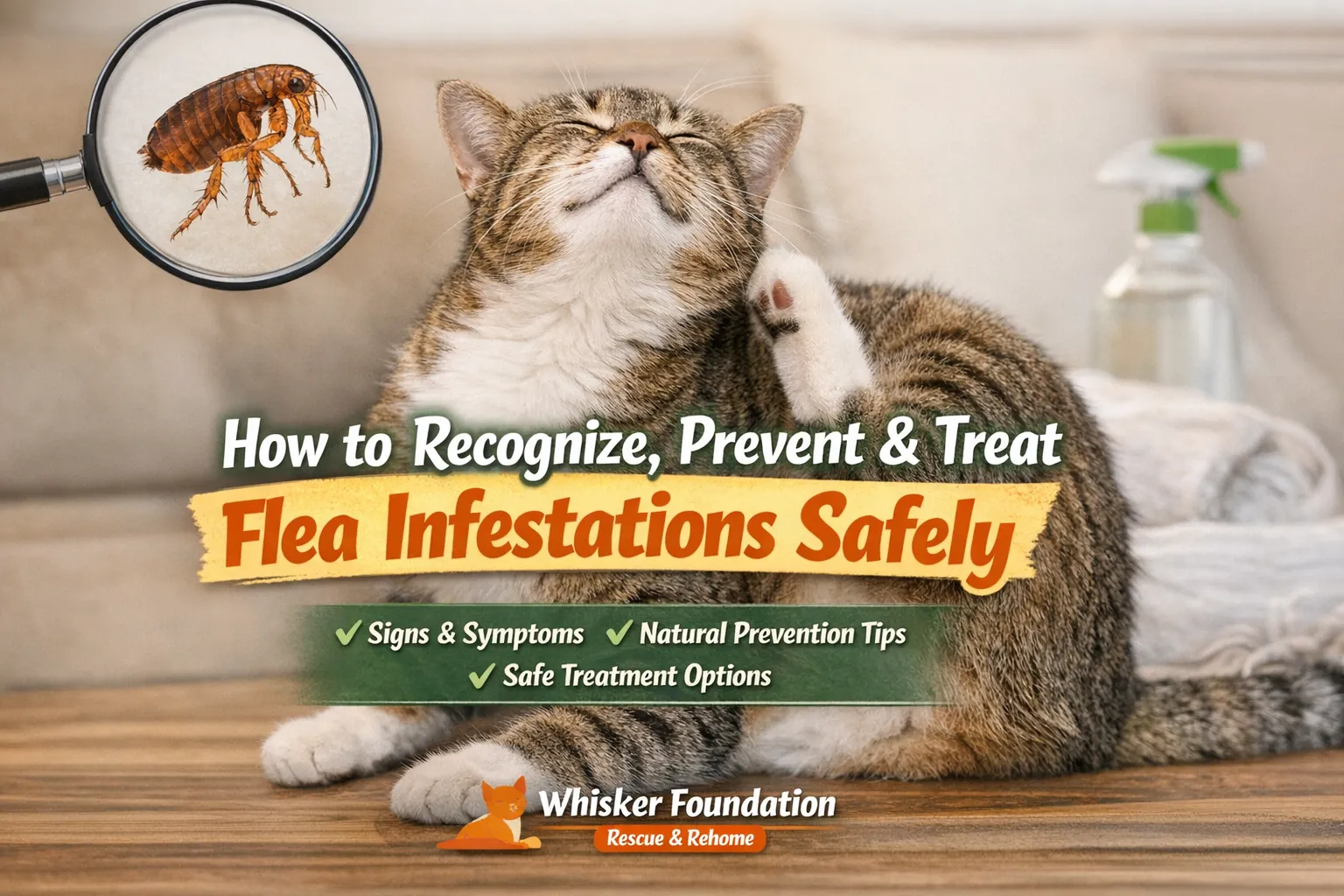
The safest way to treat fleas on cats is to use veterinarian-approved flea preventatives such as Revolution, Advantage, or similar medications specifically designed for cats. These treatments kill adult fleas and interrupt the flea life cycle so new fleas cannot continue reproducing.
Successful flea control almost always requires treating both the pet and the home environment, since flea eggs and larvae often develop in carpets, bedding, and furniture.
Fleas are among the most common parasites affecting cats and dogs, and they can quickly become a household problem if not addressed early. What begins as a single flea can rapidly multiply into hundreds living in carpets, furniture, bedding, and outdoor spaces.
For pet owners and rescuers alike, understanding how to recognize fleas early—and how to safely eliminate them—is key to protecting your pet’s health and preventing an infestation from spreading through your home.
Flea activity typically increases during warmer months when humidity and temperature allow fleas to reproduce quickly. In many parts of the United States, flea season begins in early spring and continues through fall.
However, fleas can survive year-round indoors, especially in heated homes where flea eggs and larvae can continue developing even during winter months. Because of this, many veterinarians recommend year-round flea prevention.
Although fleas are often dismissed as a minor nuisance, they can create serious health issues for pets.
Fleas feed on blood, and heavy infestations can lead to anemia, particularly in kittens or small animals. Fleas can also transmit parasites such as tapeworms when pets ingest infected fleas during grooming.
Some cats develop a condition called flea allergy dermatitis, where even a single flea bite can trigger severe itching, inflammation, and skin damage.
At Whisker Foundation, we have seen firsthand how serious flea allergies can become. One of the cats currently in our care arrived with persistent skin irritation and hair loss. After investigation, we discovered the underlying cause was fleas. She has a strong flea allergy, meaning that even one flea bite can trigger painful skin flare-ups.
Fleas are small and move quickly, which makes them difficult to spot. Many pet owners first notice behavioral changes rather than the insects themselves.
Cats with fleas often scratch frequently, groom excessively, or chew at irritated skin. The base of the tail and the back of the neck are common areas where flea activity becomes noticeable.
A flea comb can sometimes reveal flea dirt, which looks like tiny black specks similar to ground pepper. When placed on a damp paper towel, flea dirt dissolves into reddish streaks because it contains digested blood.
Even indoor pets can get fleas. Fleas can enter homes through contact with other animals, wildlife in the yard, visiting pets, or even by hitching a ride on clothing or shoes.
Once fleas enter the home, they reproduce quickly. Adult fleas lay eggs that fall off the animal and settle into carpets, furniture, and bedding where they continue developing.
Because much of the flea life cycle occurs in the environment, treating the pet alone usually does not eliminate the infestation.
Very young kittens require special consideration when treating fleas. Many standard flea medications cannot be used safely until kittens reach a certain age or weight.
For kittens that are too young for medication, gentle flea combing is often the safest method. The comb physically removes fleas and flea dirt from the fur. In some cases, rescuers may also use a brief warm-water bath with mild soap to help eliminate fleas, though this must be done carefully to avoid chilling the kitten.
Because kittens are small and still developing, even moderate flea infestations can affect them more quickly than adult cats. If fleas are present on very young kittens, consulting a veterinarian or experienced rescue is always recommended.
Some flea infestations can be managed with careful cleaning and treatment, but others require veterinary-approved flea prevention to fully resolve the problem. Veterinarians may recommend treatments such as monthly topical medications, oral flea preventatives, or prescription flea collars that are designed specifically for cats. These treatments work by interrupting the flea life cycle and preventing new fleas from continuing the infestation.
At Whisker Foundation, we’ve seen firsthand how serious flea problems can become. One of the cats currently in our care initially presented with severe skin irritation and hair loss. After investigation, we discovered that the underlying cause was a flea allergy. For cats like her, even a single flea bite can trigger painful skin reactions and inflammation. This is a good reminder that flea prevention isn’t just about comfort—it can be critical for protecting sensitive cats from ongoing health issues.
One commonly prescribed option is Revolution, a monthly topical treatment applied to the back of the cat’s neck. It kills adult fleas and helps prevent flea eggs from developing, while also protecting against other parasites such as ear mites and certain intestinal worms.
Another widely used treatment is Advantage II for Cats, a topical medication that begins killing fleas within about 12 hours and continues protecting cats for up to 30 days. It works through contact, meaning fleas do not need to bite the cat in order to die.
For cats with an active infestation, veterinarians sometimes recommend Capstar as a fast-acting first step. This oral tablet begins killing adult fleas within about 30 minutes and can eliminate most fleas on a cat within several hours. However, it only kills adult fleas and does not prevent new ones from developing, so it is typically followed by a longer-term preventative treatment.
Because every cat’s age, weight, and health history is different, your veterinarian can help determine which flea preventative is safest and most effective for your pet. Using products specifically labeled for cats is essential, as some flea medications designed for dogs can be dangerous to felines.
Many pet owners prefer plant-based flea solutions. Always confirm a product is safe for cats, since cats are sensitive to certain essential oils.
Safety Tip:
Never apply essential oils directly to cats unless the label specifically states cat-safe. When in doubt, check with your veterinarian.
Breaking the flea life cycle requires persistence. Fleas develop in stages—egg, larva, pupa, and adult—and each stage may be hiding in different areas of the home.
Regular vacuuming is one of the most effective ways to remove flea eggs and larvae from carpets, rugs, and furniture. Pay particular attention to areas where pets sleep or spend time. After vacuuming, dispose of the vacuum contents outside to prevent fleas from escaping back into the home.
Washing pet bedding in hot water also helps eliminate flea eggs that may be embedded in fabric. Many rescuers and foster homes make this part of their routine whenever fleas are suspected.
Consistency is the key. Repeating these steps several times a week for a few weeks interrupts the flea life cycle and prevents newly hatched fleas from establishing another infestation.
Outdoor environments can also contribute to flea problems, especially in warmer regions or during peak flea season. Fleas prefer shaded, moist areas where they can survive while waiting for a host animal to pass by.
Keeping the yard maintained can significantly reduce flea populations. Regularly trimming grass and removing piles of leaves or yard debris helps eliminate the humid hiding places fleas prefer. Areas where pets rest outdoors should also be cleaned regularly, including washing any bedding or blankets left outside.
Some homeowners also use natural biological controls such as beneficial nematodes. These microscopic organisms live in soil and feed on flea larvae, helping reduce flea populations in outdoor spaces without harming pets or wildlife.
By managing both outdoor and indoor spaces, you can greatly reduce the chances of fleas returning.
In many cases, fleas can be treated successfully at home. However, there are situations where veterinary care is important.
Cats that show signs of weakness, pale gums, severe skin irritation, or ongoing scratching despite treatment should be evaluated by a veterinarian. These symptoms may indicate complications such as anemia, allergic dermatitis, or secondary infections.
Young kittens, pregnant cats, and cats with existing health conditions may also require veterinary guidance to ensure flea treatments are safe.
Flea infestations are a common challenge for cat owners, but they are also highly manageable when recognized early and treated properly.
Understanding the signs of fleas, using safe treatment methods, and preventing infestations before they start can protect both your cat and your home. With the right approach, flea problems can be resolved quickly and safely.
For cat owners and rescuers alike, staying informed about flea prevention and treatment is an important part of responsible feline care.
Yes. Fleas can enter homes through visiting pets, wildlife, or even on clothing and shoes. Once inside, fleas can reproduce in carpets, furniture, and bedding.
Common signs include excessive scratching, biting at the skin, restlessness, and small black specks in the fur known as flea dirt.
Eliminating fleas can take several weeks because flea eggs in the environment continue hatching. Treating both the pet and the home is essential to breaking the flea life cycle.
Yes. Cats with flea allergies can experience severe itching and skin irritation from a single flea bite.
Many veterinarians recommend year-round prevention because fleas can survive indoors even during colder months.