Phone:
(206 ) 992-71256
Physical address:
Everett, Washington
Email address:
info@whiskerfoundation.org

Phone:
(206 ) 992-71256
Physical address:
Everett, Washington
Email address:
info@whiskerfoundation.org
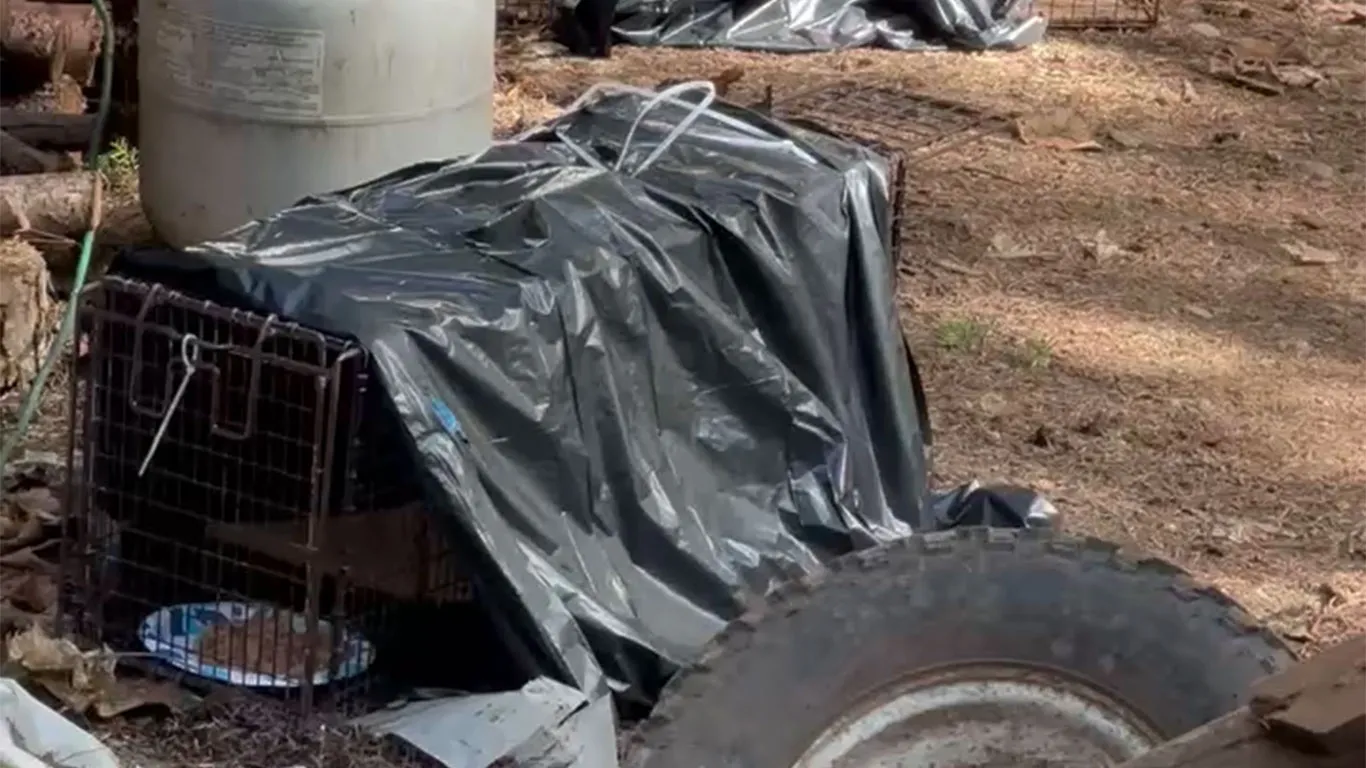
A day of Trap-Neuter-Return (TNR) is when volunteers work together to humanely trap community cats so they can receive spay or neuter surgery, vaccinations, and basic medical care. After recovery, the cats are returned to the area where they were found. TNR prevents new litters from being born, improves the health of outdoor cats, and helps stabilize community cat populations over time.
Last week, I had the privilege of assisting Community Cat Coalition, based in Mukilteo, Washington, with a Trap-Neuter-Return (TNR) effort in the hills of Monroe, Washington.
In just two hours, we humanely trapped 11 community cats — 5 females and 6 males. Even more impressively, nine of them were safely trapped within the first hour.
That kind of success does not happen by accident. It happens because of preparation, patience, and experience.
The property owner, James, has cared for these cats for years. He feeds them daily. He watches for them at certain times of day. He knows their personalities — who hangs back, who comes forward first, who prefers a quiet corner. He has named them and can tell them apart without hesitation.
These aren’t just “feral cats” to him. They are individuals. They matter to him.
And because they matter, he understands that love also means responsibility — making sure they are spayed and neutered so they can live healthier lives without bringing more kittens into an already fragile situation.
Feral and community cats reproduce quickly. A single unspayed female can have multiple litters each year, and kittens can begin reproducing as young as four to five months old. Without intervention, populations grow exponentially.
Spay and neuter:
TNR is not about removing cats from where they live. It is about stabilizing the colony so the cats already there can live healthier, safer lives — without adding to overpopulation.
One of the most important steps in TNR begins days before trapping.
Several days before the actual trapping, humane traps are placed at the site with the doors zip-tied open. The cats are fed only in the traps, and they become comfortable going in to eat.
They begin to associate the traps with food rather than fear.
Feral cats are cautious by nature. Sudden changes can cause them to avoid new objects entirely. Allowing time for familiarity dramatically increases success on trapping day.
Another critical part of preparation is accountability. Every trap is counted before being set, and every trap is counted again before leaving the property. You must leave with the same number of traps you brought. No trap should ever be left behind. Careful tracking ensures that no equipment is left behind and no animal is accidentally left unattended.
Preparation is not just about catching cats — it is about doing the work responsibly, safely, and thoughtfully from start to finish.

Trapping can take hours. Sometimes it lasts an entire day, depending on the colony, terrain, and the cats’ level of socialization.
In our case, we trapped eleven cats within two hours — and nine of them within the first hour.
That efficiency reflects the experience of Community Cat Coalition’s trappers. They understand cat behavior. They know where to place traps. They remain quiet and patient. They monitor constantly.
This is not chaotic. It is controlled. It is intentional. And it is humane.
As each cat is trapped, volunteers immediately assess the cat while it remains safely inside the trap. They check carefully to ensure the cat is not an owned pet wearing a collar and look for an ear tip to confirm the cat has not already been altered. This step prevents unnecessary surgery and ensures that only unaltered community cats are processed.
Each trapped cat is then covered with a towel or blanket. Darkness reduces stress and helps the cat feel secure.
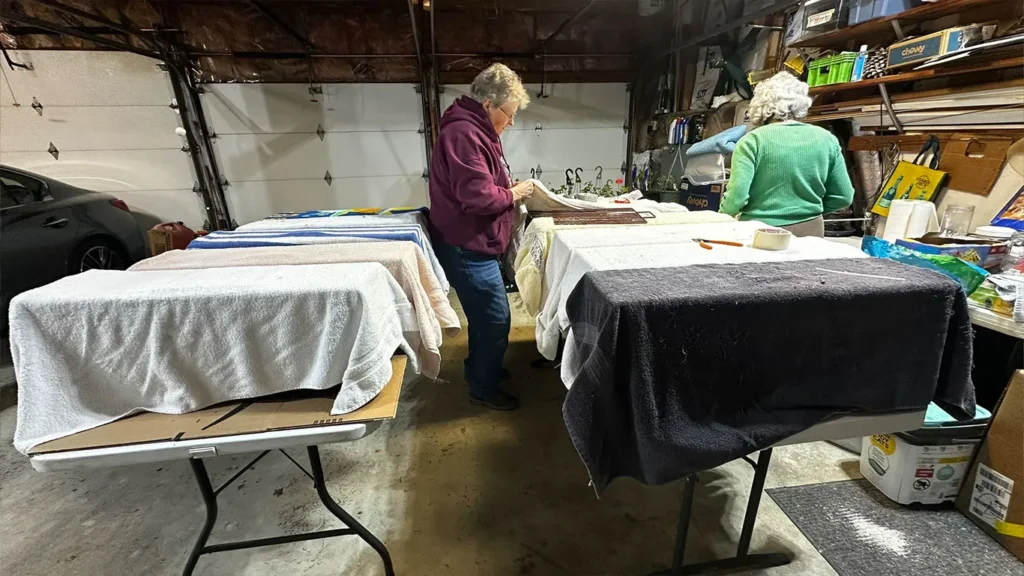
After trapping, the cats remain safely inside their humane traps overnight in a secure, temperature-controlled space.
Holding them in the traps the night before their surgery appointments ensures the cats will be available for their 7:30 am appointments the following day. They are safe, and by keeping them covered, they are comfortable in the traps.
Each cat is carefully examined while still in the cage. If food has spilled or the cardboard lining has been soiled, it is replaced immediately. Soft blankets are added to improve comfort.
A large comforter is placed over the traps to trap warmth and reduce outside noise. Darkness and quiet significantly lower stress levels. What may feel restrictive to us provides security to a feral cat.
Holding them in the trap overnight serves an important purpose: it keeps them safe and minimizes stress. Removing them prematurely could increase fear or risk of injury.
The next morning, they are transported to the Everett Animal Shelter for surgery.
At the shelter, each cat receives spay or neuter surgery and a full health check. Depending on the situation, cats may also receive vaccinations during this time.
Every cat is ear-tipped while under anesthesia. The ear tip — a small, painless removal of the tip of one ear — is the universal sign that a feral cat has been altered. It prevents unnecessary re-trapping and immediately lets volunteers know the cat has already been through the TNR process.
After surgery, the cats are transported back to a safe recovery space and monitored overnight to ensure everything went smoothly. They remain inside their humane traps during recovery for safety and stress reduction. The traps stay covered to maintain warmth and minimize noise while they wake from anesthesia.
The following day, once fully awake and stable, the cats are transported back to the exact location where they were trapped.
This is the “Return” in Trap-Neuter-Return — and it is just as important as the trapping and surgery.
Feral cats are territorial. The outdoor environment they live in is not random — it is mapped in their minds. They know where to find food. They know where to hide from predators. They understand escape routes, safe resting spots, and the rhythms of the land.
Relocating a feral cat to a new area can be dangerous and disorienting. It can lead to stress, starvation, conflict with other cats, or attempts to travel long distances back to their original territory. Removing cats entirely can also create a vacuum effect — when new, unaltered cats move in and begin reproducing again.
Returning them stabilizes the colony. The altered cats maintain their territory, preventing new cats from moving in, but they no longer reproduce. Over time, the population declines naturally and humanely.
James was there when they returned. He still feeds them. He still cares for them. But now there will not be endless litters of kittens struggling to survive in the hills — and the colony can live out their lives in a healthier, more stable way.
That is why the Return matters.
Trap-Neuter-Return isn’t just something rescues believe in because it feels right — it’s something that has been studied for decades.
One of the longest-running TNR studies took place at the University of Central Florida. Over 28 years, researchers tracked the campus cat population and found an 85% decline following consistent spay-and-neuter efforts. The cats weren’t removed. They weren’t relocated. They were sterilized, monitored, and allowed to live out their lives — and over time, the population naturally decreased.
Another long-term program along the San Francisco Bay Trail saw a 99% reduction in cats over 16 years. No new litters were born into the colony once the cats were sterilized, and the population gradually declined as the cats aged.
Research also shows that communities using TNR often see fewer cats entering shelters. In Albuquerque, combining TNR with return-to-field efforts led to an 84% drop in feline euthanasia and a significant decrease in overall intake.
Beyond population numbers, there are health and behavior benefits too. When cats are spayed and neutered:
No solution is perfect, and discussions about wildlife and ecosystems continue. But long-term data show one clear pattern: doing nothing allows populations to grow. Consistent spaying and neutering stabilizes them — and often reduces them over time.
TNR works when it is done thoughtfully, consistently, and with community cooperation.
What happened in those hills outside Monroe may seem small at first glance — eleven cats trapped in a couple of hours. But the impact reaches far beyond a single morning.
Those eleven cats — five females and six males — are no longer contributing to an endless cycle of litters. They will not produce dozens of kittens this year. And those kittens will not multiply into hundreds over time. Instead, the colony is now stable. Healthier. Manageable. Humane.
That stability is the direct result of preparation, experience, and people willing to step in before a problem grows beyond control. It is also a reflection of the dedicated work of Community Cat Coalition — volunteers who show up quietly, consistently, and compassionately to do the work many people never see.
TNR works because it addresses the root cause — reproduction — while respecting the cats’ lives and the territory they know. It protects the animals’ well-being. It supports caregivers like James. And it prevents future suffering before it ever begins.
Real change doesn’t always look dramatic. Sometimes it looks like quiet, thoughtful, consistent work.
If you’ve ever wondered whether TNR makes a difference — it does.
One trap at a time. 🧡
TNR doesn’t happen without funding. Traps, surgeries, recovery supplies, fuel, and clinic coordination all come at a cost. Community Cat Coalition continues this work because the community stands behind them.
If this story moved you, consider donating to support their efforts. Sustainable change depends on sustained support.
This article was written by the team at Whisker Foundation, a Washington-based nonprofit cat rescue focused on education, prevention, and responsible adoption. Our team regularly works with lost cats, kitten season cases, and spay and neuter programs in Everett and throughout Snohomish County and surrounding communities.
Whisker Foundation is a 501(c)(3) nonprofit dedicated to reducing cat overpopulation through education, rescue, and community support. Our goal is to help cat owners understand the behaviors and risks that can lead to cats going missing and provide practical steps to help keep pets safe.
Trap-Neuter-Return (TNR) is a humane method for managing outdoor cat populations. Community cats are safely trapped, taken to a veterinarian for spaying or neutering and vaccination, and then returned to the area where they were found. This approach stops reproduction and improves the health and stability of the colony.
TNR helps prevent thousands of kittens from being born outdoors while allowing community cats to live out their lives in the territory they know. B stopping reproduction, TNR gradually stabilizes and reduces outdoor cat populations while improving the health and welfare of the cats.
During a TNR effort, cats are humanely trapped and transported to a clinic where they are spayed or neutered, vaccinated, and ear-tipped. Ear-tipping is a small, painless procedure performed while the cat is under anesthesia that indicates the cat has already been sterilized. After recovery, the cat is returned to its original location.
Many community cats are feral, meaning they are not socialized to humans and cannot safely live indoors. Returning them to their outdoor territory allows them to continue living in a familiar environment while preventing reproduction.
When cats are spayed or neutered, they can no longer produce kittens. Over time, this stabilizes and gradually reduces the size of outdoor cat colonies as the cats naturally age and no new litters are born.
People can help by supporting local rescues, volunteering with TNR programs, donating to organizations that provide spay-and-neuter services, and ensuring their own cats are spayed or neutered to prevent accidental litters.
Local groups such as the Community Cat Coalition work with volunteers and rescue organizations to provide training, resources, and spay-and-neuter support for people helping community cats throughout Washington.