Phone:
(206 ) 992-71256
Physical address:
Everett, Washington
Email address:
info@whiskerfoundation.org

Phone:
(206 ) 992-71256
Physical address:
Everett, Washington
Email address:
info@whiskerfoundation.org
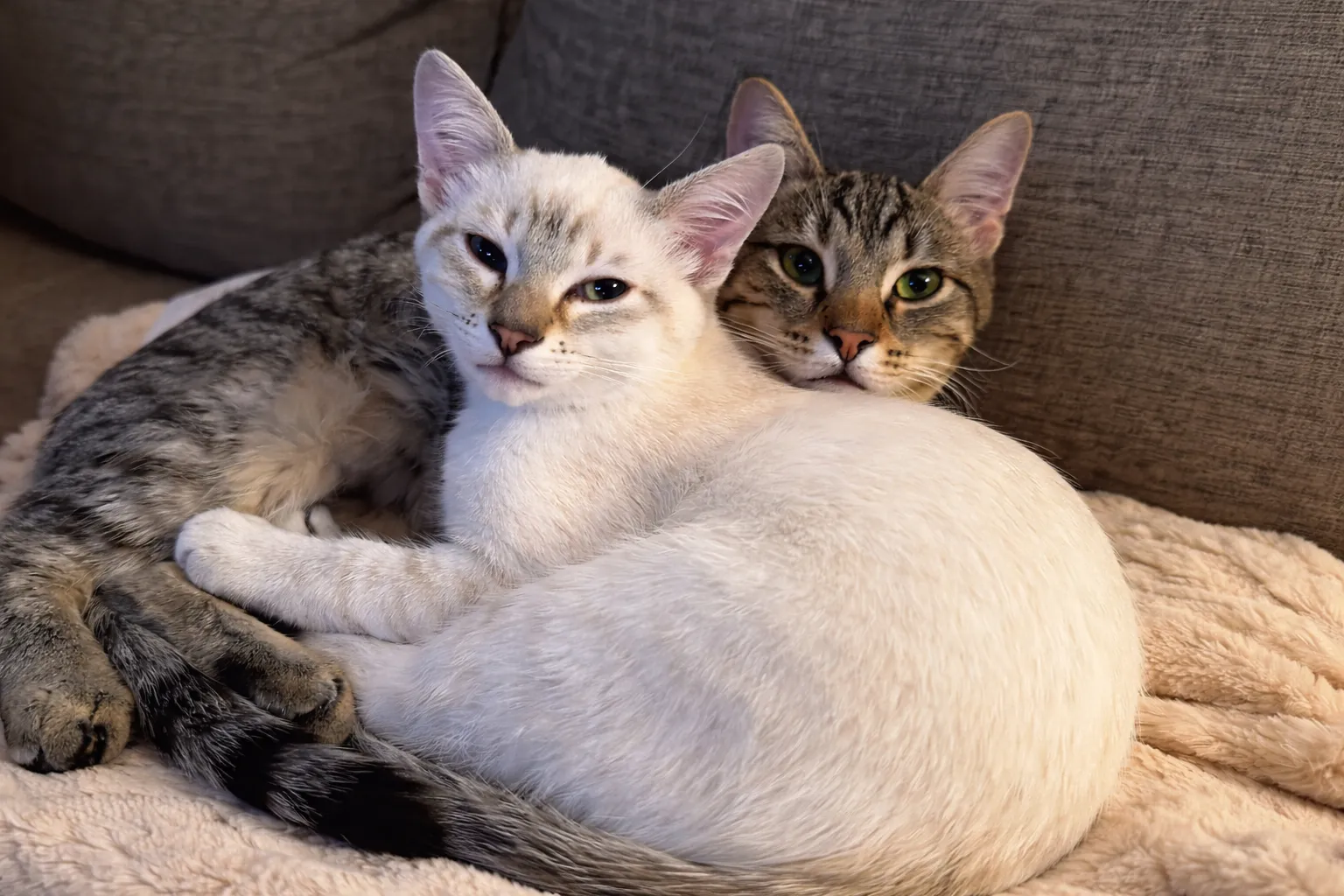
Bringing home a new kitten is exciting — until your resident cat hisses, hides, or acts offended by the tiny newcomer. If this happens, don’t panic. This is normal feline behavior.
Cats are territorial by nature. A sudden new kitten in their space can feel like an invasion. Without proper introductions, tension can turn into long-term stress or aggression. But with patience and a structured plan, most cats learn not only to tolerate each other — but often to form strong bonds.
At Whisker Foundation in Everett, Washington, we guide adopters through kitten introductions every week. This complete guide walks you through exactly how to introduce a new kitten to your resident cat safely and successfully.
Cats rely heavily on scent, routine, and territory. When a new kitten appears without warning, your resident cat may feel threatened. This can lead to:
The American Association of Feline Practitioners (AAFP) confirms that slow, scent-based introductions significantly reduce behavioral issues in multi-cat homes.
Taking time in the beginning prevents long-term problems later.
Preparation makes introductions smoother. Before your kitten arrives:
When you first bring your kitten home, place them in their starter room. This gives them time to:
Meanwhile, your resident cat will begin noticing the new scent behind the closed door. Expect sniffing, curiosity, or mild hissing at the door — all normal.
Do not rush this stage. Confidence builds slowly.
Cats recognize family by scent more than sight. Before they ever meet face-to-face, allow them to become familiar with each other’s smell.
Try:
This teaches your resident cat:
“This new smell belongs here — and good things happen when it’s around.”
The Humane Society lists scent exchange as the single most important step in cat introductions.
Once both cats seem calm with scent swapping, allow short visual contact:
If either cat shows signs of stress (flattened ears, growling, puffed tail), calmly end the session and return to scent-only steps for another day or two.
Progress is rarely linear — that’s okay.
When visual sessions go smoothly, allow short supervised meetings in a shared room.
Helpful tips:
Never punish hissing — it’s normal communication.
Over the next week or two:
The ASPCA recommends multiple resources to prevent competition in multi-cat homes.
Avoid:
❌ Forcing immediate contact
❌ Letting cats “fight it out”
❌ Removing safe retreat spaces
❌ Feeding cats from one bowl
❌ Rushing the process
Slow introductions prevent future behavioral problems.
Every cat is different. Typical timelines:
Patience is your greatest tool.
✔ Calm body language
✔ Curiosity instead of fear
✔ Eating near each other
✔ Playing separately in same room
✔ Occasional mutual grooming
Friendships often develop over time.
At Whisker Foundation, we want every adoption to succeed. Every adopter receives:
Introducing a new kitten to your resident cat takes time, but most cats learn to live peacefully — and many become lifelong companions. Slow steps, scent exchange, and positive experiences make all the difference.
If you’re preparing to adopt, Whisker Foundation in Everett, WA is here to support you before and after adoption.
🐾 Visit our Cat Care Education Library
🐾 Learn about kitten health, safety, and home care
🐾 Support local rescue efforts
👉Read more helpful articles
If you’re interested in adopting a kitten, visit our adoption page to view available cats and learn about our adoption process: Available Kittens